CXL Memory Pooling Ends the Era of Wasted Server RAM

CXL Memory Pooling Ends the Era of Wasted Server RAM
TPM 2.0 Explained: The Security Chip Protecting Your PC

GAA Nanosheet Transistors: Biggest Chip Shift Since 2011

Wafer-on-Wafer Bonding Breaks AI's Bandwidth Wall
Why Quantum Computers Need 1,000 Qubits for One
TPM 2.0 and Pluton: Hardware Root of Trust Explained
TL;DR: Google, IBM, and every major quantum computing company converged on the transmon qubit because it offered the best trade-off between noise immunity and manufacturability. Flux qubits survive in D-Wave's annealers, and hybrid fluxonium designs may soon challenge transmon dominance.
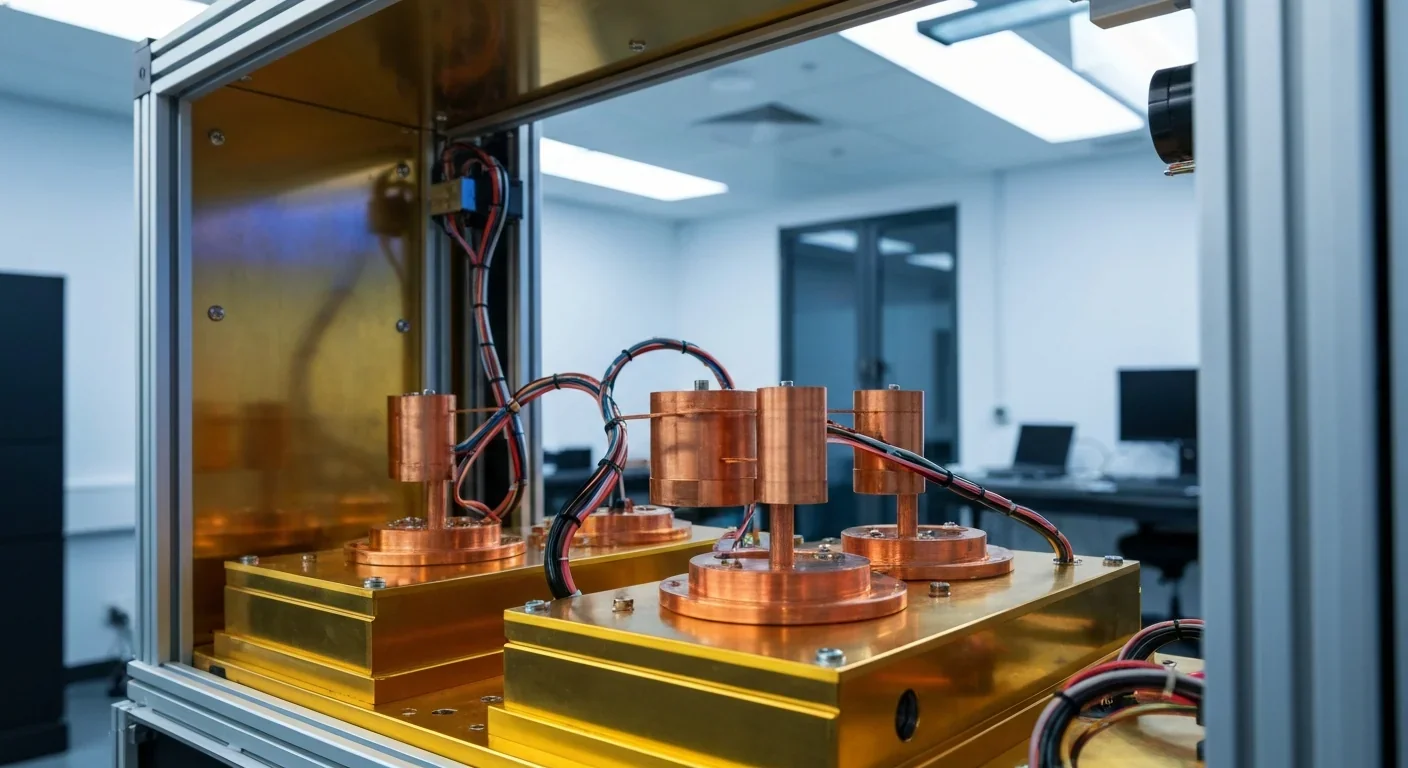
The next technological revolution won't be what you expect. While headlines trumpet quantum supremacy milestones and billion-dollar investments, a quieter story has been unfolding in cryogenic labs around the world. Two of the planet's most powerful technology companies, Google and IBM, spent decades exploring radically different approaches to building quantum computers, and then converged on essentially the same design.
That design, the transmon qubit, wasn't the fastest, wasn't the most elegant, and wasn't even the most physically interesting option on the table. But it won anyway. Understanding why tells us something profound about how cutting-edge technology actually gets built.
In 2007, a team led by Jens Koch at Yale University published a paper that would reshape the trajectory of quantum computing. They introduced the transmon, a modification of an earlier device called the Cooper pair box. The core idea was deceptively simple: add a large shunting capacitor to the circuit. This increased the ratio of the Josephson energy to the charging energy, a parameter physicists call EJ/EC. The payoff was enormous. Charge noise sensitivity, the nemesis that had plagued superconducting qubits for years, dropped exponentially.
The transmon didn't just nudge performance forward. It fundamentally altered the noise landscape of superconducting circuits, making qubits stable enough to perform meaningful computations. State-of-the-art transmon devices now achieve coherence times of 100 to 500 microseconds, with recent tantalum-based designs from Princeton pushing past 1.6 milliseconds, fifteen times longer than standard industry qubits.
Single-qubit gate fidelities now exceed 99.9 percent, and two-qubit gates routinely surpass 99 percent. These numbers matter because fault-tolerant quantum computing requires error rates below specific thresholds, and transmons got there first.
Charge noise sensitivity drops exponentially as the EJ/EC ratio increases, while anharmonicity decreases only as a modest power law. This asymmetry is the mathematical foundation of the transmon's success.
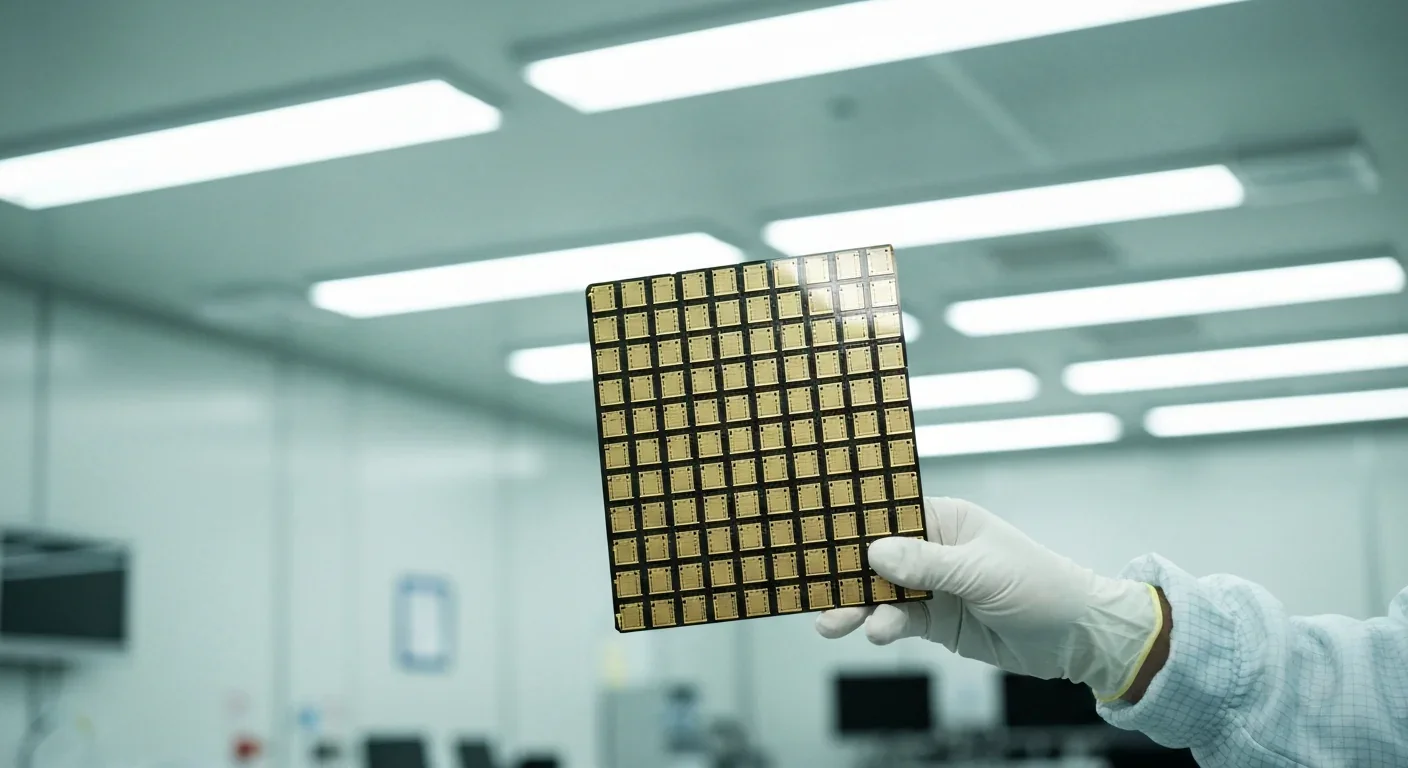
To understand why transmons won, you need to know what they beat. The story starts in the late 1990s, when physicists were still figuring out which quantum systems could serve as reliable building blocks for computation. Two competing philosophies emerged in the superconducting world.
The first was the charge qubit approach. These early devices, including the Cooper pair box demonstrated by NEC researchers in 1999, encoded information in the number of Cooper pairs on a small superconducting island. They worked, but they were exquisitely sensitive to stray electric charges in the surrounding material. Background charge fluctuations caused rapid decoherence, limiting useful computation to just nanoseconds.
The second path was the flux qubit, pioneered by Terry Orlando at MIT and Hans Mooij at Delft University in 1999 and 2000. Flux qubits took a completely different approach. Instead of storing information in charge, they encoded it in the direction of circulating current in a tiny superconducting loop interrupted by three or four Josephson junctions.
The logic was sound: magnetic noise in practical circuits was believed to be much smaller than electrical noise from material defects. Why fight charge noise when you could sidestep it entirely?
And flux qubits had genuine advantages. Their anharmonicity approached 100 percent of the transition frequency, with f12 frequencies reaching 30 GHz. This meant ultra-fast gates shorter than 10 nanoseconds, something transmons can't match. In physics terms, flux qubits were the faster, more anharmonic design. But physics alone doesn't build industries.
Early flux qubit experiments at Delft and Stony Brook demonstrated superposition of macroscopic current states but struggled with coherent control. Their longest decoherence times hovered between 500 nanoseconds and 4 microseconds. Meanwhile, flux qubits demanded precise magnetic flux biasing at exactly half a flux quantum, requiring dense networks of flux-bias lines that complicated scaling.
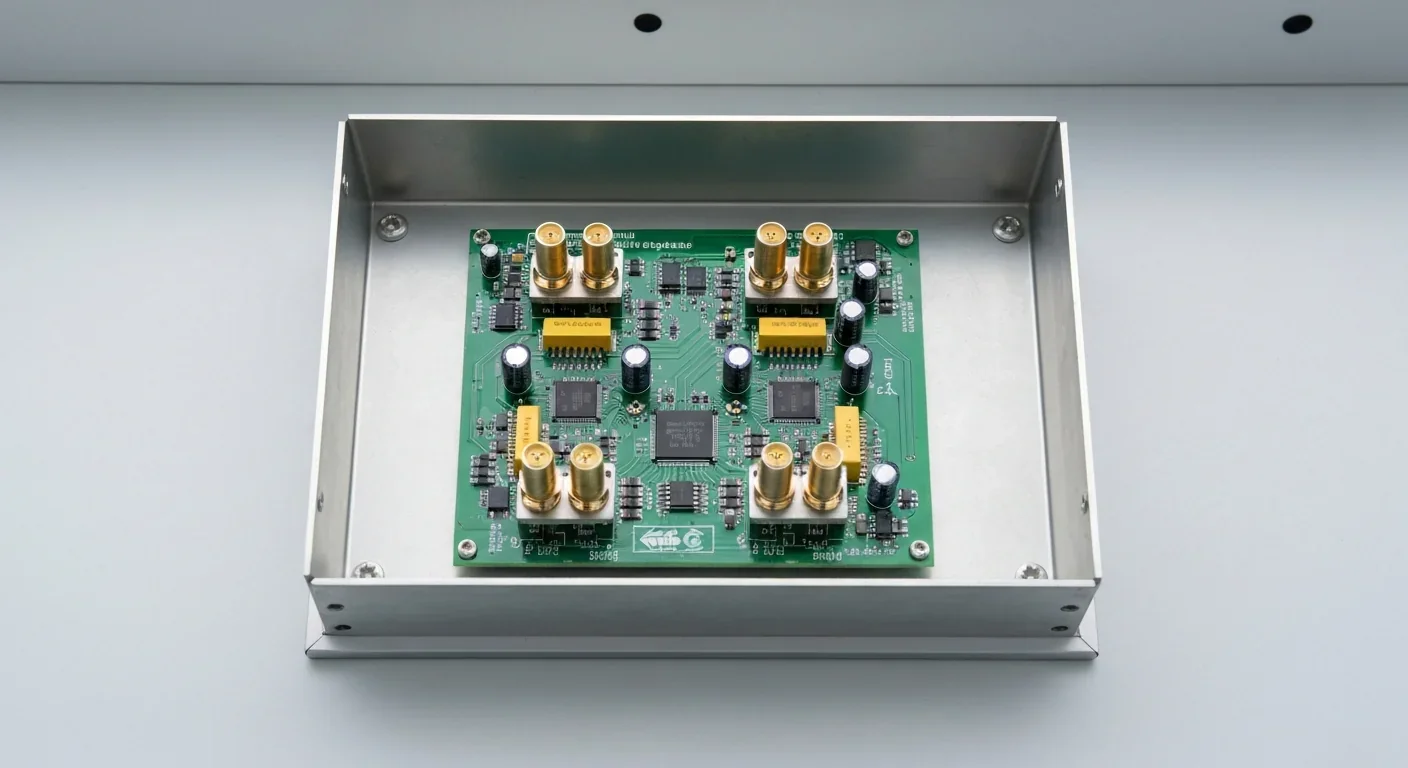
The transmon's secret wasn't superior physics. It was a superior engineering trade-off. By cranking up the EJ/EC ratio with a large shunt capacitor, transmons exponentially suppressed charge noise while accepting a reduction in anharmonicity to roughly -200 to -300 MHz. That's a significant compromise. Lower anharmonicity means slower gates and increased risk of accidentally exciting higher energy levels during operations.
But here's the crucial insight: that anharmonicity penalty turned out to be manageable. Engineers developed sophisticated microwave pulse techniques, including DRAG pulses and Gaussian envelopes, that used destructive interference to suppress leakage to higher states. The problem was solvable with software and calibration rather than fundamental hardware changes.
"The transmon qubit's success stems from its optimal balance of multiple critical factors: charge noise insensitivity, high gate fidelities, good connectivity in 2D lattices, material flexibility, structural simplicity, and compatibility with standard fabrication techniques."
- Brian D. Colwell, Quantum Computing Researcher
Fabrication sealed the deal. Transmons are built using standard silicon microfabrication techniques, the same processes that underpin the semiconductor industry. A single Josephson junction and a capacitor, lithographically defined on a chip. Flux qubits, by contrast, required multiple precisely matched junctions in a loop, with fabrication variability in any one junction degrading the whole device.
The large shunt capacitor in transmons actually relaxed tolerances on junction areas, boosting manufacturing yield, a crucial factor when you're trying to build chips with hundreds of qubits.
IBM integrated transmons into its quantum processors around 2012 and never looked back. The company developed the heavy-hex topology and multilayer 3D packaging that allowed its Eagle processor to reach 127 qubits, followed by Osprey at 433 and Condor at 1,121 qubits. IBM's roadmap targets 100,000 qubits by the end of the decade, all transmon-derived.

Google took a parallel path. Its Sycamore processor, with 53 transmon qubits, completed a task in 200 seconds that would have taken a classical supercomputer an estimated 10,000 years, the 2019 quantum supremacy milestone. Google's latest Willow processor with 105 transmon qubits continues this trajectory. Rigetti, IQM, and others followed the same playbook.
This wasn't groupthink. It was convergent engineering. Transmons offered the best combination of charge noise immunity, high gate fidelities, good connectivity in 2D lattices, and compatibility with standard fabrication. No other single design checked all those boxes simultaneously.
Flux qubits didn't disappear. They found a home at D-Wave Systems, which took a fundamentally different computational approach: quantum annealing rather than gate-based computing. D-Wave's Advantage2 prototype packs over 5,000 flux qubits into a processor that doesn't need the precise gate control that makes flux qubits so difficult to scale.
The approach has teeth. D-Wave recently claimed quantum supremacy on a practical problem, simulating the quantum dynamics of a complex magnetic material in minutes that would take Oak Ridge National Lab's Frontier supercomputer roughly a million years.
D-Wave's 5,000-plus flux qubit annealer solved a practical materials science simulation in minutes that would take the world's most powerful classical supercomputer nearly a million years to match.
Meanwhile, researchers in Tokyo, Cambridge, and Maryland have been quietly developing a design that splits the difference. The fluxonium qubit combines the loop physics of flux qubits with a large superinductor shunt, achieving coherence times exceeding 1 millisecond, roughly ten times longer than standard transmons, while retaining high anharmonicity.
An MIT team demonstrated two-qubit gate fidelity of 99.9 percent and single-qubit fidelity of 99.99 percent using a fluxonium-transmon-fluxonium architecture that suppresses the unwanted crosstalk interactions that plague all-transmon systems.
"The longer a qubit lives, the higher fidelity the operations it tends to promote. These two numbers are tied together."
- Leon Ding, MIT EQuS Group
Atlantic Quantum, a startup founded by MIT researchers, is building commercial quantum computers based on fluxonium. D-Wave itself has pivoted toward gate-based computing with a five-phase roadmap that leverages its flux qubit fabrication expertise and multilayer integrated circuit technology to reduce the wiring bottleneck.

The next chapter of quantum computing hardware might not be about choosing between transmons and flux qubits at all. Recent research on C-shunt flux couplers shows they can suppress crosstalk between transmon qubits to below 1 kilohertz, an order of magnitude better than conventional transmon couplers.
Hybrid architectures that pair fluxonium qubits with transmon couplers achieve complete cancellation of static ZZ interactions, eliminating a problem that has haunted all-transmon designs since their inception. Integer fluxonium, operated at zero external flux bias with frequencies around 3 GHz, could integrate directly into existing transmon-based control infrastructure.
Researchers at MIT Lincoln Laboratory have built dense arrays of over 100 Josephson junctions specifically for fluxonium, tackling the fabrication scalability challenge that historically blocked flux-based designs.
The transmon's dominance was never about being the best qubit in every dimension. It was about being good enough across all the dimensions that matter for building real machines. But "good enough" has a shelf life. As material innovations push transmon coherence past 1 millisecond and fluxonium designs prove they can match or exceed transmon fidelity, the monoculture that defined quantum computing's first commercial era may be ending.
The question isn't whether alternative qubit designs will find their way into production hardware. It's whether the industry can move fast enough to adopt them before the limitations of transmon-only architectures become the bottleneck on the path to fault-tolerant quantum computing.
What started as a physics experiment in a Yale lab in 2007 became the foundation of a global industry. What happens next will depend on whether the engineers building tomorrow's quantum machines are willing to bet on something new, or whether the pragmatism that made transmons dominant will keep them there for another decade. Either way, the story of the transmon is a reminder that in technology, the winner isn't always the most brilliant design. Sometimes it's just the one that's easiest to build.

Project Orion was a real 1960s program to reach other stars by detonating 800 nuclear bombs behind a spacecraft. The physics worked and the engineering was feasible, but the 1963 nuclear test ban treaty killed it. It remains the most credible interstellar spacecraft ever designed.

The locus coeruleus, a tiny brainstem structure, degenerates decades before Alzheimer's symptoms appear. Its loss cripples the brain's inflammation control, waste clearance, and sleep regulation. New imaging tools and noradrenergic therapies offer hope for early detection and prevention.

Research shows the sharing economy often increases total resource consumption through the Jevons paradox and rebound effects. Ride-sharing adds billions of vehicle miles, co-working spaces use more energy per worker, and diffused responsibility erodes conservation behavior. Breaking the paradox requires congestion pricing, accountability design, and matching sharing models to appropriate resource types.

Psychological reactance theory explains why banning or restricting things makes people want them more. From Prohibition to the Streisand effect to scarcity marketing, research shows that threatening people's freedom reliably backfires, and autonomy-supportive communication is far more effective.

A carnivorous pitcher plant in Borneo evolved to house bats instead of trapping insects, gaining up to 95% of its nitrogen from bat guano. The plant even built an ultrasonic reflector to help bats find it, revealing that carnivory in plants is a flexible spectrum.

The quantified self movement began as a hacker-ethos pursuit of personal insight, but corporate wearables now funnel biometric data to employers, insurers, and data brokers. With 81% of Americans wrongly believing health apps are HIPAA-protected, a regulatory void enables health data to be sold for pennies while generating anxiety instead of empowerment.
CXL memory pooling lets servers dynamically share DRAM over a cache-coherent interconnect, eliminating the 40% stranded memory waste in data centers. With commercial hardware now shipping and Azure deploying CXL cloud instances, this technology promises to cut memory costs by 50% while enabling composable infrastructure.

Loading featured articles...